How a Personal Fitness Coach Builds Your Training Plan
Most people don't fail at fitness because they're lazy. They fail because they're running someone else's program, a plan built for a 25-year-old with two hours a day and zero injuries, downloaded off an app that has no idea who they are.
I've been coaching long enough to know the questions that show up around week three: Am I doing the right exercises? Should I be lifting heavier? Why has the scale stopped moving? Nine times out of ten, the honest answer is: your plan was never built for you in the first place.
That's the entire point of working with a personal trainer instead of a generic program. At Antman Fitness, I don't hand you a template. I build your plan around your body, your schedule, your history, and what you're actually trying to accomplish, then I keep adjusting it as you change.
The First Thing I Do Isn't Pick Your Exercises
Before I write a single workout, I need to understand the person doing it. That conversation matters more than the program itself.
I ask about your training history, your injuries, your schedule, what you've tried before and why it stopped working, and what "success" actually looks like to you. I had a client last year who came to me after three separate gym memberships and zero results. Not because she wasn't working hard, but because every program she'd followed assumed she had five days a week to train. She had three, on a good week. So that's what we built around.
If you can realistically train three days a week, I'm not writing you a six-day split. You'll follow it for ten days and quit, and that's on the program, not on you.
Your Goal Decides Everything Downstream
"I want to get fit" isn't a goal I can program from. I need something I can measure: drop 15 pounds by summer, add 30 pounds to your squat, stop getting winded on the stairs, and fit back into the jeans from two years ago. Once I know the real target, everything else, exercise selection, how much volume you handle, how fast we progress, falls into place around it.
How I Actually Build the Plan
Once I know where you're starting and where you want to end up, I build the program itself. That means factoring in your training frequency, your session length, what equipment you have access to, and your experience level.
A beginner spends more time with me on movement patterns and consistency before we chase heavier weight. Someone who's been lifting for years needs a completely different conversation, usually around managing fatigue and pushing intensity without breaking down. I'm not trying to make your program complicated. I'm trying to make it right for you.
Picking Exercises You'll Actually Do
I build programs around compound lifts and movement patterns that give you the most return, but I also build in exercises you don't hate. If you tell me you'd rather do anything than a barbell hip thrust, I've got three other exercises that hit the same muscles just as hard. A program only works if you show up and do it, so your preferences aren't an afterthought, they're part of the plan.
Structuring Your Week Around Your Actual Life
Knowing which exercises to do is the easy part. Fitting them into your week without wrecking your recovery is where most people go wrong on their own.
If you can train for three days, I'm probably putting you on full body sessions. If you've got five days and more experience, we split things up differently. And recovery isn't an afterthought in my programs. It's built in on purpose, because training without recovering is just accumulating fatigue, not progress.
Adjusting the Dials: Intensity and Volume
Two things I'm constantly tuning are how hard each session is (intensity) and how much total work you're doing (volume). If you're a beginner and you're wrecked after every session, I pull back. If you've adapted to your current load and stopped progressing, I add more. This is the part most people never do for themselves: they either grind at the same weight forever or they jump up too fast and get hurt.
I Track Your Progress So You Don't Have to Guess
The mirror lies. Some weeks you'll feel like nothing's happening even when your lifts are climbing and your body composition is shifting. That's why I track numbers, not vibes: strength gains, measurements, workout performance, consistency, and photos, depending on what actually matters for your goal.
If your goal is strength, I'm watching the bar go up. If your goal is fat loss, I'm watching the scale trend, your waist measurement, and how your clothes fit, because scale weight alone lies to people constantly.
Nothing About Your Plan Is Permanent
Bodies adapt. Life changes. Sometimes progress stalls even when you're doing everything right, and that's not a reason to panic. It's a reason to adjust. I've moved clients from a fat-loss phase into a strength-building phase mid-program because their body and their motivation both told us it was time. That flexibility is the difference between a coach and a spreadsheet.
How I Handle Nutrition: Flexible, Not Restrictive
Here's where I differ from a lot of coaches. I don't hand you a meal plan and tell you to eat chicken and broccoli for twelve weeks. I build your nutrition around flexible dieting, hitting your daily calorie and macro targets (protein, carbs, and fat) while still eating foods you actually enjoy.
If you love pizza on a Friday, we build that into your macros instead of pretending it doesn't exist. I've had clients lose 20+ pounds while still having a slice of pizza every week, because the plan worked with their life instead of against it. Rigid, restrictive diets fail almost everyone eventually, not because people lack willpower, but because nobody sustains "never eating the foods they love" for years. Flexible dieting isn't a shortcut. It's just the version of nutrition people can actually stick to.
Your Lifestyle Is Part of the Program, Not an Obstacle to It
You've got a job, maybe a family, unpredictable weeks, travel. I build around that reality instead of ignoring it. Someone with 45 minutes after work needs a completely different program than someone with two free hours at the gym. The best plan isn't the one that looks impressive on paper. It's the one you'll still be doing in six months.
I Hold You Accountable
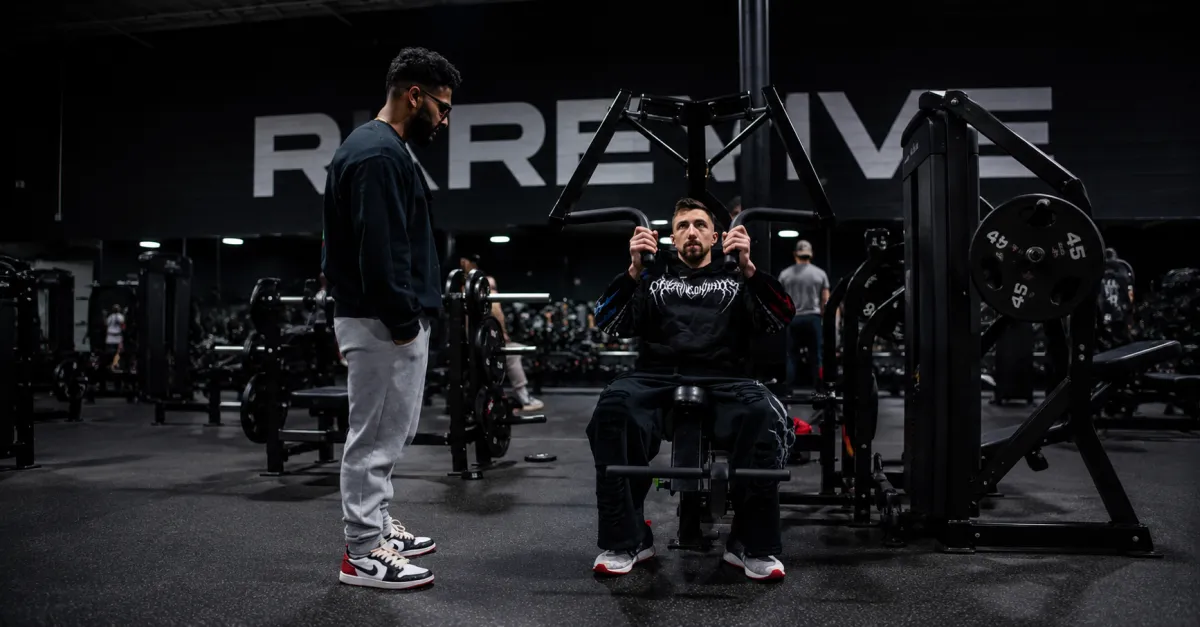
Having a plan helps. Having someone checking in on whether you actually did it helps more. I run regular check-ins with my clients, not to hover over every meal, but so we catch problems while they're small instead of three months later when you've quietly stopped showing up. Accountability is one of the biggest reasons people stick with in-person training instead of trying to figure it out alone.
I Keep Pushing You Forward, On Purpose
If you do the exact same workout with the exact same weight forever, your body stops adapting. I build in progression deliberately. Sometimes that's more weight, sometimes it's better technique, more reps, or a harder variation of the same movement. The point is that every change I make is intentional, not just "make it harder because it's Tuesday."
Technique Comes Before Ego
Lifting heavier doesn't matter if your form is breaking down to get there. I coach technique first, especially with beginners, because the habits you build in your first few months are the ones you'll carry for years.
Your Plan Today Isn't Your Plan in Six Months
As you get stronger and more experienced, the plan changes with you. What was hard in month one is easy by month four, and I rebuild the program to match. That's the whole cycle I run with every client: assess, plan, train, track, adjust, progress, on repeat, for as long as we work together. If you want a closer look at what that process actually involves day to day, here's what a fitness coach really does for you.
Let's Build Your Plan
If you're tired of guessing your way through workouts, jumping between programs you found online, or dieting so rigidly that you burn out every few months, I'd rather just build this properly with you from the start.
Message me directly and tell me where you're starting and what you're chasing. I'll tell you honestly what it'll take to get there: no generic templates, no soft sales pitch, just a plan built around you.
Krishna, Antman Fitness
