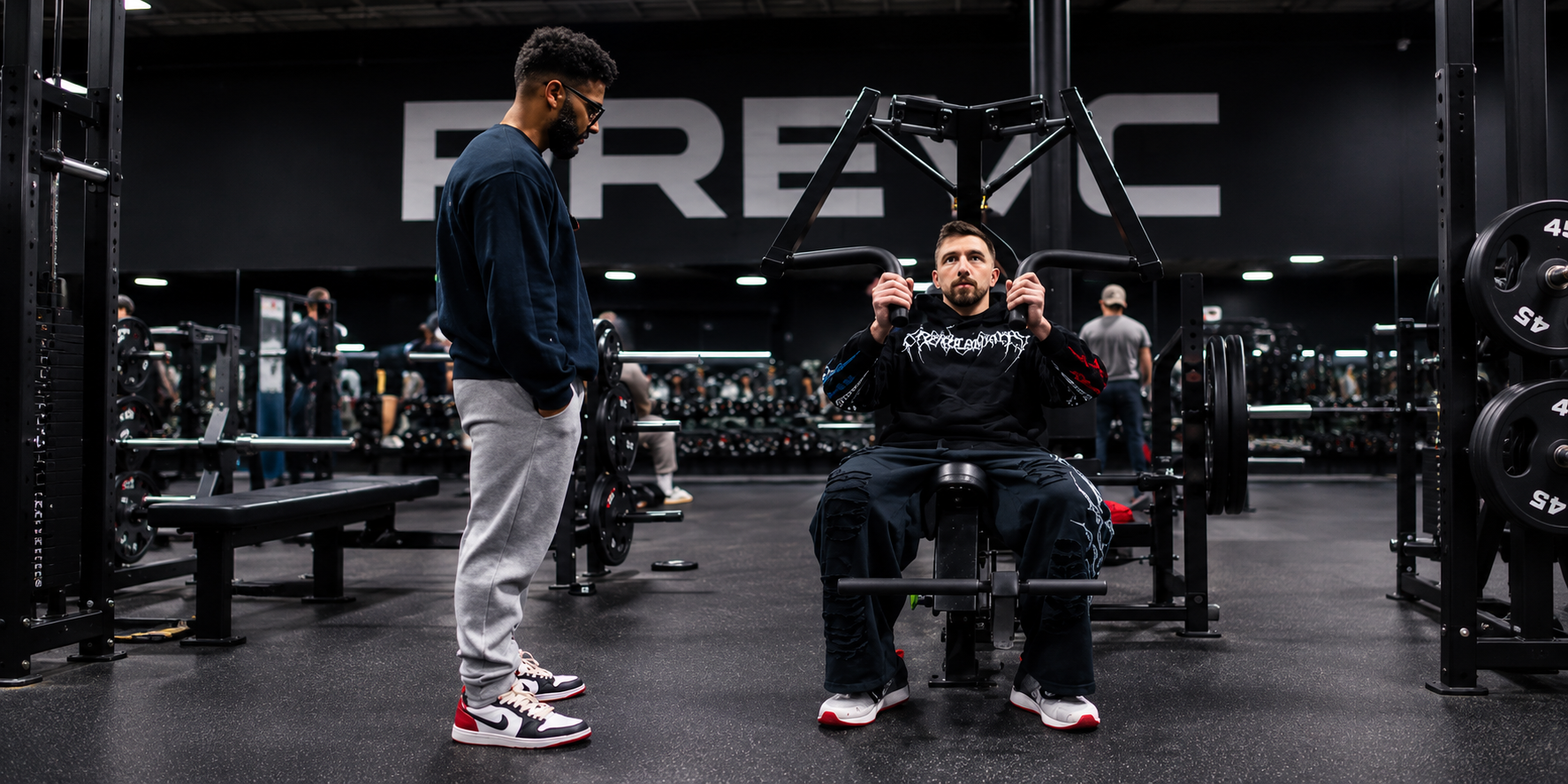
Bodybuilding Contest Prep: A Timeline for First-Time Competitors
The first question every new competitor asks me is the same: “How long do I actually need?” It’s a fair one, because bodybuilding contest prep isn’t a few weeks of eating less and hoping for the best. It’s a sequence, and each stage sets up the next one. Skip the early stages and the final weeks get ugly fast.
Below is the contest prep timeline I walk first-timers through, from the day you decide to compete to the week after you step off stage. Use it to check where you are right now and what you should start doing today.
Before You Pick a Show Date
Don’t pick the show first. Pick it after you’ve answered four honest questions.
Do you have muscle to show? Prep takes weight off. It doesn’t add muscle. If you’ve only been lifting for a few months, a longer offseason will do more for your stage presence than any diet. If you’re still working out how much training your body can recover from, start with my breakdown of volume, rest, and growth.
Can your life handle it? Prep means weighed meals, early mornings, and saying no to some dinners. Look at your calendar for the next four to five months. A wedding, a move, or a brutal work season in the middle of your cut is a real problem, so plan around it.
What will it cost you besides food? Entry fees, trunks or a suit, a tan, travel, and the show-day food all add up, and they’re easy to forget when you’re focused on the diet. Add them up before you commit, so nothing surprises you in the final weeks.
Which federation? Rules, divisions, and testing policies differ from show to show, and some are natural while others aren’t. Decide this early, because it shapes your division, your poses, and your timeline.
Bodybuilding Contest Prep Timeline: Phase by Phase
Every body is different, so treat these ranges as a map, not a prescription. Your starting point decides how much of this you need.
The offseason (six months or more out). This is where the show is built. You eat enough to grow, train hard, and bring up weak points. It’s also when you start practicing the mandatory poses. Most first-timers wait on posing until they’re tired and lean, and that’s backwards. Poses held for 30 seconds feel very different when you’ve done them for months.
Early prep (roughly 20 to 12 weeks out). Depending on how lean you start, a first-timer often needs somewhere between 12 and 20 weeks of dieting. I’d rather you start a bit early and move slowly than start late and crash. Calories come down gradually, training stays heavy so you hold on to muscle, and we start tracking weight and photos every week.
Mid prep (about 12 to 6 weeks out). This is where progress photos earn their keep. The scale only tells part of the story, so we compare photos week to week and adjust food from there. If cardio gets added, it goes up gradually, not all at once. Energy dips, sleep gets lighter, and hunger shows up. All normal, and all easier to manage when you’ve been tracking.
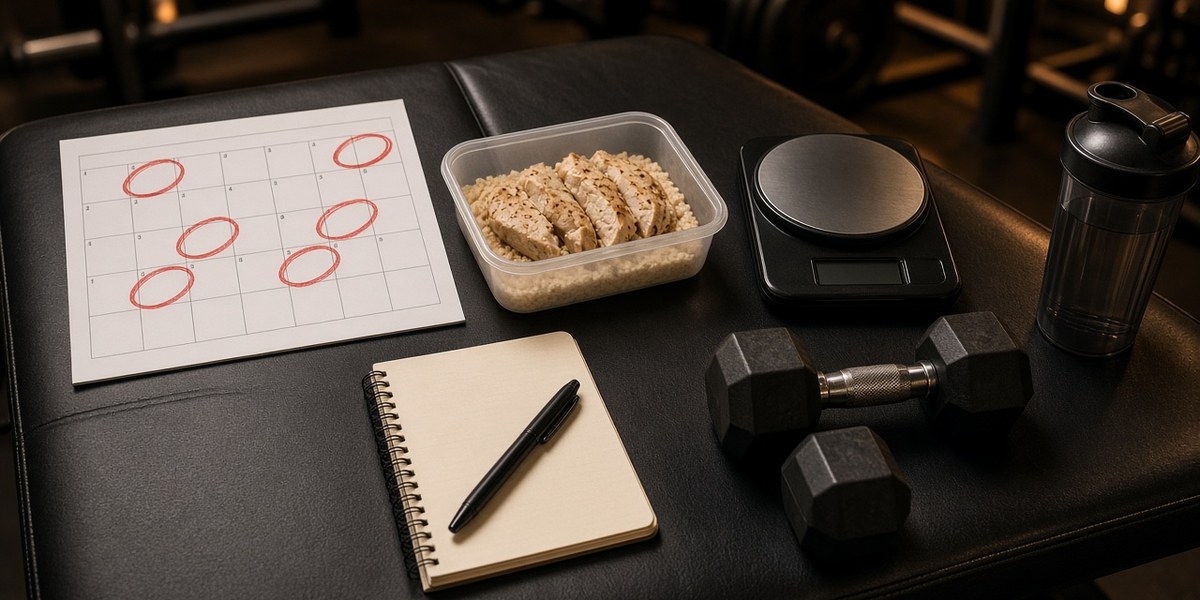
Here’s what I’d track every single week from this point on: body weight, a set of photos in the same light and poses, your lifts, and how you slept. One number alone can mislead you. Four of them together rarely do. If your lifts are falling off a cliff or your sleep is falling apart, that’s a signal to adjust, not to tough it out.
The final weeks (about 4 to 2 weeks out). Conditioning details matter now, and so does the stage itself. You rehearse your routine, check your trunks and tan plans, and sort out registration and check-in times. Nothing in these weeks should be new.
Peak week. Small adjustments to food, water, and sodium are common, and they’re individual. This is the worst week to experiment from a forum thread, and the best week to have someone who can read your look each day.
Show day and after. Show day is about food timing, pump-up, and staying calm. Afterward, you reverse out of the deficit slowly. Many first-timers rebound hard in the two weeks after a show, and that’s where a lot of the hard-earned condition disappears.
What Trips Up First-Time Competitors
The same mistakes show up again and again.
Starting too late is the big one. A short prep forces a steep deficit, and a steep deficit costs muscle, sleep, and sanity. Right behind it is dieting too hard too early, which leaves nothing to adjust when the final weeks need it.
Then comes skipping posing practice, changing things in peak week because a friend swore by it, and treating the weeks after the show like they don’t matter.
Preparation looks boring from the outside, and that’s the point. Nick Martinez came to me for his first show and finished prep 45 lbs down. That’s what good prep looks like: steady work, done on time, week after week.
Mikey G is another one. He stepped on stage for the first time and took 1st in Novice Open and the Overall. Looking back at it, the story was months of dialed-in training, strict nutrition, and peak week adjustments all landing on one day. You can see more stage results and their stories on my page of competition prep and stage wins.
First shows go well when the plan is built backward from the date, and when somebody is watching the details you can’t see in your own mirror.
Here’s How I Run Prep With First-Timers
When a first-timer applies for show prep, I start by working backward from the show date to see how much runway we have. Then I build the plan from offseason to peak week, so each phase sets up the next one.
At Antman Fitness, my bodybuilding training program covers the pieces first-timers usually can’t do alone. You get individualized macros built around your body and your current phase, adjusted weekly so conditioning keeps moving forward. You get posing and presentation coaching on the mandatory poses. You get regular photo reviews to track how you’re coming in, and guidance through peak week and show day.
I handle the nutrition side the same way I do with every client, and if you want to see how that works in practice, my post on how I make nutrition coaching fit your training lays it out.
Sessions are held near Old Bridge, NJ. I read every application myself, and if your show date is closer than your body is ready for, I’ll tell you that before we start. A later show is better than a rushed one.
Ready to compete? Apply for show prep, choose the Bodybuilding Show Prep option, and tell me your target date.
Frequently Asked Questions
How long does bodybuilding contest prep take?
For most first-timers, the dieting phase runs somewhere between 12 and 20 weeks, depending on how lean you are when you start. That sits on top of an offseason where you build the muscle you plan to show. Starting a bit early is almost always better than starting late.
Can I compete as a natural athlete?
Yes. There are natural federations and divisions built for exactly that. Natural competitors are among the stage results on my transformations page, and the plan is built around your division and your rules.
Do I need to be lean before I start prep?
No, but it helps to start from a reasonable place. The leaner and more muscular you are at the start, the shorter and gentler your prep can be. If you’re far from it, a longer offseason or a slower first phase usually beats a rushed cut.
When should I start practicing my poses?
Early, ideally well before the diet starts. Mandatory poses are physically demanding, and they’re a skill like any other. Practice them weekly during the offseason so they’re second nature by the time you’re lean and tired.
Is contest prep safe?
Done sensibly, with gradual progress and honest monitoring, it can be. It’s still a demanding process, and an aggressive deficit puts real stress on the body. If you have any health concerns, talk to your doctor before you start.
What happens after the show?
You come out of the deficit slowly instead of eating everything in sight. The weeks after a show are when many first-timers rebound the hardest, so we plan the exit before the show, not after.
