
How to Break a Weight Loss Plateau (Without Starving Yourself)
Every client I've coached has hit this moment. The first few weeks go great, the scale drops, clothes fit better, and then it just stops. Same weight for two, three, four weeks. You're still doing the work, and nothing is moving.
A weight loss plateau is frustrating, but it's normal, and it's fixable. The answer is almost never "eat even less and do more cardio." Here's why plateaus happen, how to tell if you're really stuck, and what I actually change with clients to get fat loss moving again.
Why does weight loss stall?
Weight loss stalls because your body adapts. As you get lighter, you burn a bit less energy each day, so the calories that created a deficit at the start may now be close to maintenance. Most people also move less outside the gym when they diet, without noticing it.
On top of that, tracking tends to get looser over time. A few extra bites, a bigger pour of oil, weekend meals that don't get logged. None of these feel like much, but together they can erase a deficit. The CDC's guidance on losing weight makes the same point: steady, gradual loss built on habits you can keep is what lasts.
Are you actually on a plateau?
You're on a real plateau if your weight and your measurements haven't changed for about three weeks or more while you're tracking honestly. One or two flat weeks usually aren't a plateau. Water, salt, stress, poor sleep, and hard training sessions can all hide fat loss on the scale for a while.
Before you change anything, look at more than one number. I have clients check these every week at their check-in:
- Weekly average weight, not a single morning weigh-in.
- Waist measurement, taken the same way each time.
- Progress photos in the same lighting.
- Strength in the gym and how your clothes fit.
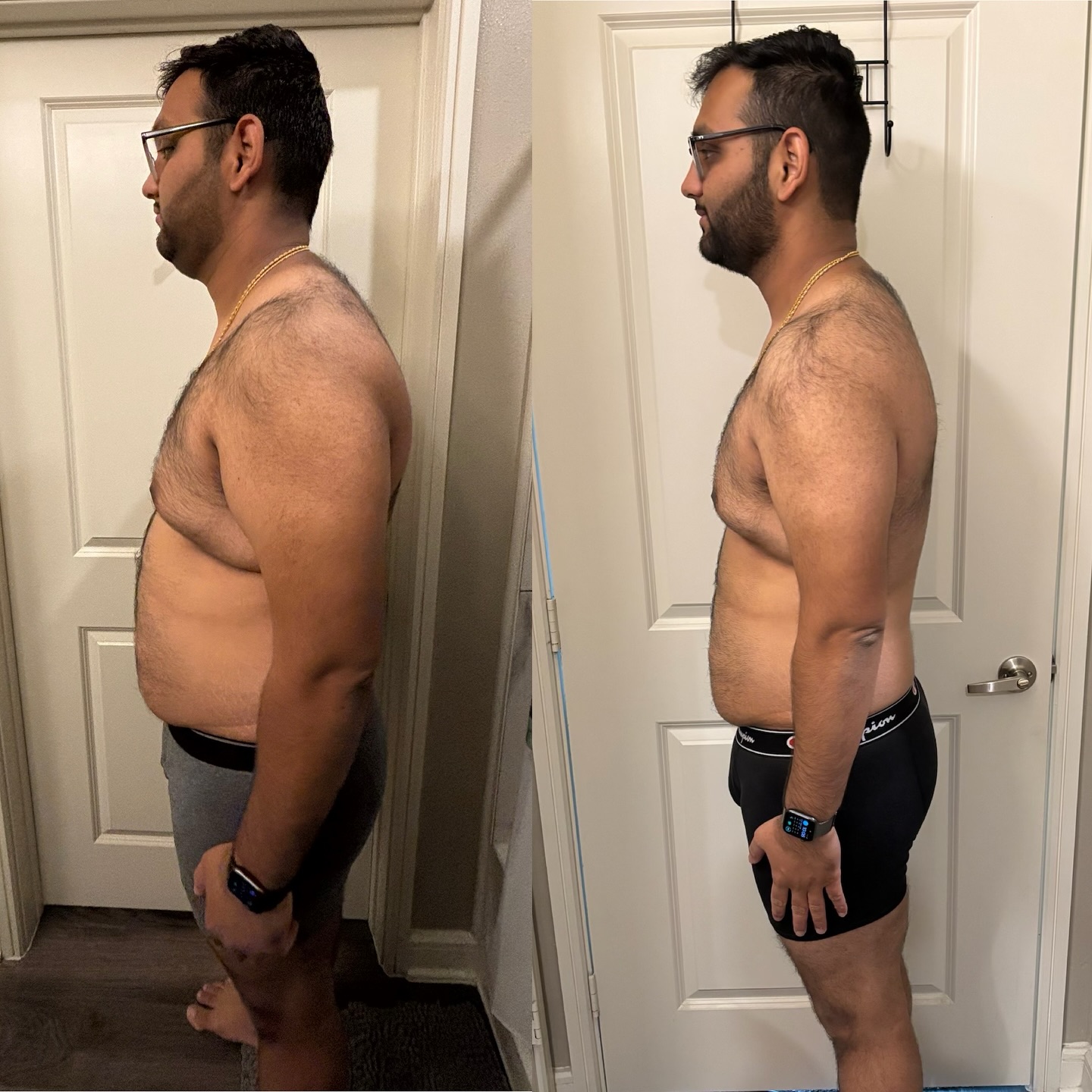
Bavandeep is a great example of why this matters. He was only down 15 pounds on the scale over four months, but his physique looked completely different. If he had judged everything by the scale, he would have quit right as it was working.
How do you break a weight loss plateau?
To break a weight loss plateau, start with the simple fixes before cutting food: tighten your tracking, raise your protein, add daily steps, and make sure your strength training is progressing. Only then adjust calories, and do it in small steps.
1. Audit your tracking for one week
Weigh and log everything for seven days, including oils, sauces, drinks, and weekend meals. Most of the time this alone shows where the deficit went. It's not about being perfect forever. It's about getting honest data so we're not guessing.
2. Eat enough protein
Protein keeps you full and helps you hold on to muscle while you lose fat. When clients stall, protein is often the first thing that's low. Build each meal around a protein source, then fit in the foods you enjoy. That's how I approach nutrition coaching that fits your training.
3. Move more outside the gym
Your workouts are only a few hours a week. What you do with the rest of your day adds up fast. A daily step goal is one of the easiest levers I use with clients. A walk after meals, taking calls on your feet, parking farther away. Small, boring, and very effective.
4. Train for strength, not just sweat
Endless cardio feels productive, but it's hard to keep adding forever, and it does little to protect your muscle. Strength training with progressive overload, meaning slowly adding weight or reps over time, keeps your body building while you diet. I break down the difference in bodybuilding training vs cardio, and the basics of volume and recovery in bodybuilding training explained.
Sagar is proof of this one. He ditched the endless cardio and cookie-cutter plans and dropped 20 pounds in 12 weeks with a smarter approach.
5. Adjust calories in small steps, or take a break
If everything above is dialed in and you're still stuck, a small calorie adjustment makes sense. Small, not drastic. If you've been dieting for months and you're tired, cranky, and hungry all the time, a planned week or two at maintenance can help you reset before you push again.
Why eating less isn't always the answer
One of the pillars I coach by is eat more than you think. When people stall, their instinct is to cut more food and add more cardio. Do that a few times and you end up eating very little, training tired, and losing muscle, which makes the next plateau even harder to break.
Shivam had been stuck for a long time when we started. We broke the plateau with a plan that fit his work, gym time, and life, and he went on to lose 30+ pounds in 4.5 months and rebuild his confidence. You can see his story and others on the transformations page.
The habits behind results like that matter more than any single trick. I go deeper on that in lifestyle coaching: how daily habits shape fitness results.
When to get a coach involved
If you've been stuck for more than a month and you're not sure what to change, a second set of eyes helps. A coach can look at your food logs, training, steps, and check-ins together and spot the problem faster than guessing on your own. If you have a medical condition or take medication that affects your weight, talk with your doctor too.
Your next step
Fitness is meant to improve your life, not imprison it. A plateau isn't a sign you failed. It's a sign your plan needs to grow with you.
If you want a plan built around your life, with weekly check-ins to catch plateaus early, apply here. It takes about 45 seconds. Prefer hands-on coaching? My in-person training sessions in Old Bridge, NJ are one-on-one and built around how you move.
FAQs
Why did my weight loss stop even though I'm doing everything right?
The most common reasons are that your calorie needs dropped as you got lighter, your daily movement outside the gym went down, or small portions and extras crept back in. Water and stress can also hide fat loss on the scale for a week or two.
How long does a weight loss plateau last?
A short stall of one to two weeks is normal and often just water. If the scale and your measurements haven't moved for three weeks or more while you're tracking honestly, that's a real plateau worth adjusting for.
Should I eat less to break a plateau?
Not always. Cutting calories again and again usually leaves you tired, hungry, and losing muscle. Often the better first step is checking your tracking, raising protein, adding daily steps, or taking a planned break at maintenance.
Will doing more cardio fix a weight loss plateau?
More cardio can help for a short time, but piling it on rarely works long term. Strength training plus more everyday movement, like walking, tends to be easier to keep up and protects your muscle.
Can I be losing fat if the scale isn't moving?
Yes. If you're strength training, you can lose fat and build muscle at the same time, so your waist, photos, and how your clothes fit can change while the scale barely moves.
What is a diet break and does it help?
A diet break is a planned period of eating at maintenance, usually one to two weeks, before going back to a deficit. Many people find it helps with energy, hunger, and sticking to the plan over the long run.
